
These Southern baked turkey wings are generously seasoned with Creole seasoning, garlic powder, onion powder, and other savory spices, then slowly baked over a bed of fresh vegetables in a flavorful chicken broth. Cooked low and slow for fall-off-the bone tenderness, these wings are finished with beautifully browned skin, and a rich homemade pan gravy. Serve them over rice or mashed potatoes for a comforting Southern-style dinner the whole family will love.

Why You’ll Love These Southern Baked Turkey Wings
Tender, fall-off-the-bone meat: Slowly baking the turkey wings at a lower temperature allows the connective tissue to soften, creating tender meat that easily pulls away from the bone.
Packed with Southern flavor: Tony Chachere’s Creole seasoning, garlic powder, onion powder, paprika, and black pepper give these wings a delicious savory flavor with a little Creole-inspired kick.
Delicious homemade gravy: The chicken broth, butter, vegetables, and turkey drippings create flavorful pan juices that can be thickened into a simple gravy.
Easy oven-baked method: There’s no need to stand over the stove. Once the turkey wings are seasoned and arranged in the roasting dish, the oven does most of the work.
Perfect for Sunday dinner: These turkey wings are delicious served with rice, mashed potatoes, collard greens, cornbread, or your favorite Southern side dishes.
Made with simple ingredients: This recipe uses familiar seasonings, fresh vegetables, chicken broth, and a few pantry staples.
Great for holidays and family gatherings: Turkey wings are a wonderful option when you want the comforting flavor of roasted turkey without preparing an entire bird.
Easy to adjust: You can make the gravy thicker or thinner, add extra vegetables, or adjust the seasoning to suit your taste.
Watch How To Make this Recipe
Watch me make these Southern baked turkey wings in the video above.
Ingredients You’ll Need
These Southern baked turkey wings get their delicious flavor from a combination of Creole seasoning, fresh vegetables, butter, and chicken broth.
For the Turkey Wings
- 2 whole turkey wings (approximately 3.28 pounds total): I use whole turkey wings with both the drumette and flat portions attached. Choose fresh or completely thawed turkey wings.
- 2 tablespoons olive oil: Helps the seasonings adhere to the turkey wings and coats the surface of the meat.
- 1 tablespoon plus 3/4 teaspoon Tony Chachere’s Original Creole Seasoning: Adds a savory blend of spices with a little heat. This seasoning contains salt, so keep that in mind before adding more.
- 1 tablespoon garlic powder: Gives the turkey wings a delicious garlic flavor.
- 1 tablespoon onion powder: Adds a rich, savory onion flavor.
- 1 teaspoon black pepper: Adds warmth and a little peppery bite.
- 1 teaspoon dried parsley: Adds a mild herbal flavor.
- 1 teaspoon paprika: Adds color and a subtle pepper flavor.
- Salt, to taste: Add only if needed, since the Creole seasoning already contains salt.
For the Vegetables and Broth
- 3 tablespoons unsalted butter: Adds richness to the turkey wings and pan juices as everything bakes.
- 1/2 white onion, roughly chopped: Adds savory flavor to the cooking liquid.
- 1/2 red bell pepper, roughly chopped: Adds color and mild sweetness.
- 1/2 green bell pepper, roughly chopped: Adds a slightly earthy flavor.
- 5 garlic cloves, roughly chopped: Add a delicious garlic flavor to the broth and vegetables.
- 1 1/2 cups low-sodium chicken broth: Provides moisture for slow baking and creates the base for the pan gravy.
For the Cornstarch Slurry
- 3 teaspoons cornstarch (1 tablespoon): Helps thicken the flavorful pan juices into gravy.
- 3 teaspoons water (1 tablespoon): Combines with the cornstarch to make a smooth slurry.
How to Make Southern Baked Turkey Wings
The key to this recipe is giving the turkey wings enough time to become tender before uncovering them and increasing the oven temperature.
Step 1: Preheat the Oven and Prepare the Vegetables
Preheat your oven to 300°F.
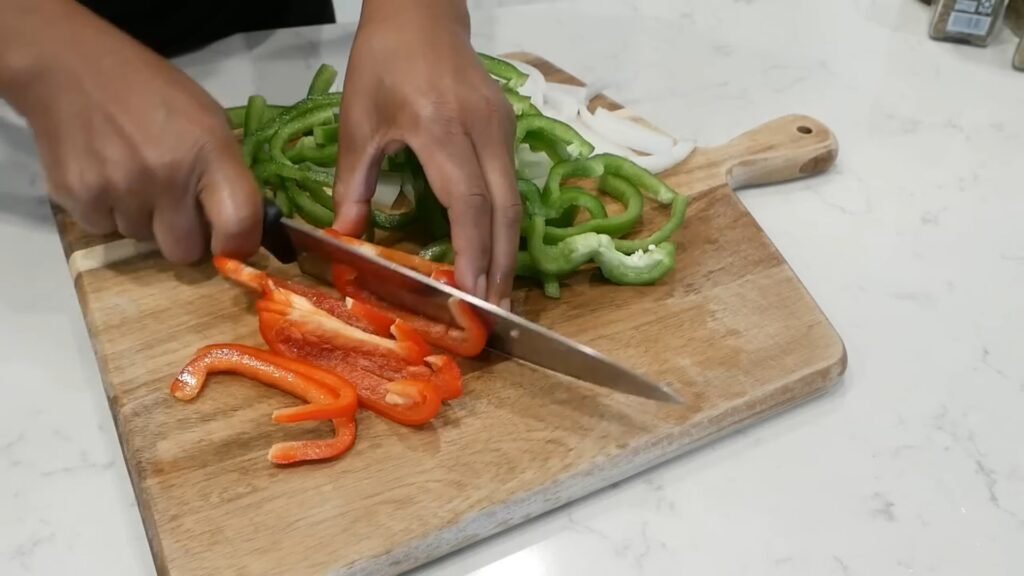
Roughly chop the white onion, red bell pepper, green bell pepper, and garlic cloves.
The vegetables don’t need to be finely diced because they’ll slowly cook in the chicken broth along with the turkey wings.
Set the vegetables aside while you prepare the meat.
Step 2: Prepare the Turkey Wings
Remove the turkey wings from their packaging and place them on a clean cutting board or in a large dish.
Using paper towels, thoroughly pat the wings dry on both sides.
Removing excess moisture helps the olive oil and seasonings adhere to the skin.
Step 3: Coat the Turkey Wings with Olive Oil
Drizzle 2 tablespoons of olive oil over the turkey wings.
Using your hands or a pastry brush, coat both sides evenly with the oil.
This creates a light coating that helps the seasoning mixture stick to the meat.

Step 4: Season the Turkey Wings
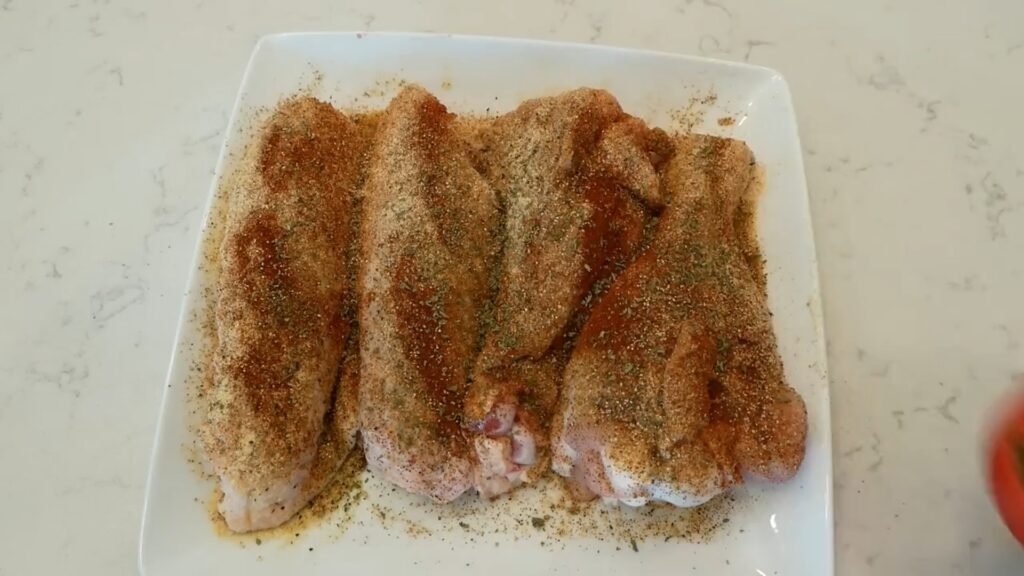
In a small bowl, combine the Tony Chachere’s Creole seasoning, garlic powder, onion powder, black pepper, dried parsley, and paprika.
Sprinkle the seasoning mixture generously over both sides of the turkey wings.
Rub the seasonings evenly over the skin and around the drumette and flat portions.
Make sure the wings are well coated for the best flavor.
Set aside while you prepare the roasting dish.
Step 5: Prepare the Roasting Dish
Add the roughly chopped onion, red bell pepper, green bell pepper, and garlic to a large roasting dish.
Pour 1 1/2 cups of low-sodium chicken broth over the vegetables.
Lightly season the vegetables and broth with a little salt and black pepper, keeping in mind that the turkey wings are already seasoned with Creole seasoning.
Gently stir the vegetables to distribute them throughout the broth.

Step 6: Arrange the Turkey Wings
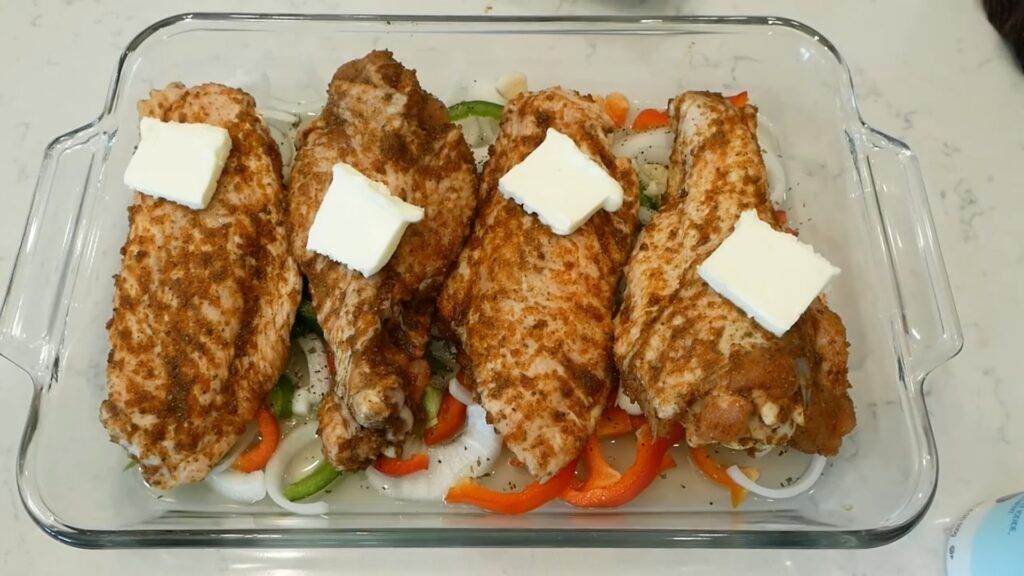
Place the seasoned turkey wings on top of the vegetables in the roasting dish.
Arrange them in a single layer so they cook evenly.
Divide the 3 tablespoons of unsalted butter into smaller pieces and distribute them evenly over the turkey wings.
As the butter melts, it will add richness to the meat and the flavorful pan juices.
Step 7: Cover and Bake Low and Slow
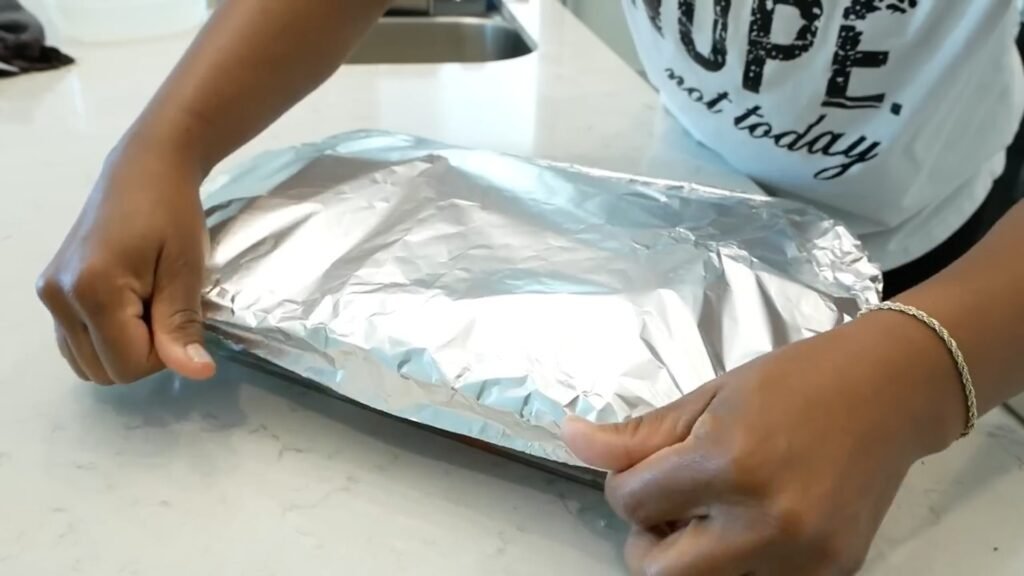
Cover the roasting dish tightly with aluminum foil.
Place it in the preheated 300°F oven and bake until the turkey wings are very tender.
Begin checking for tenderness after approximately 2 1/2 hours. Depending on the size and thickness of the wings, cooking may take around 2 1/2 to 3 1/2 hours or longer.
The turkey must reach a minimum internal temperature of 165°F, but dark-meat turkey wings generally become much more tender when cooked beyond that temperature.
For fall-off-the-bone results, continue cooking until the meat is fork-tender and pulls away from the bone easily.
If the liquid becomes too low during cooking, add a small amount of additional broth to prevent the vegetables and pan drippings from burning.
Step 8: Prepare the Cornstarch Slurry
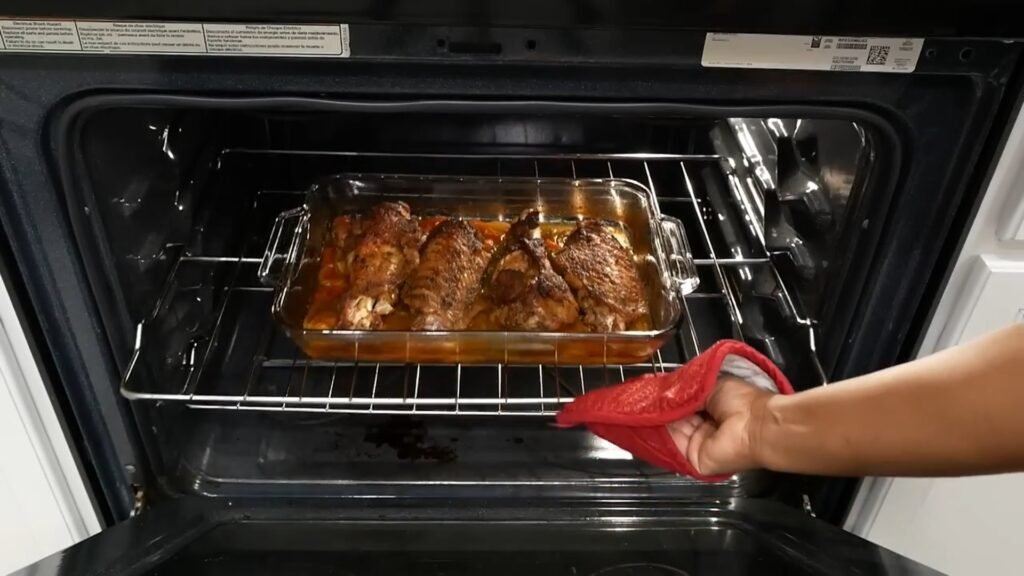
Once the turkey wings are tender, carefully remove the roasting dish from the oven.
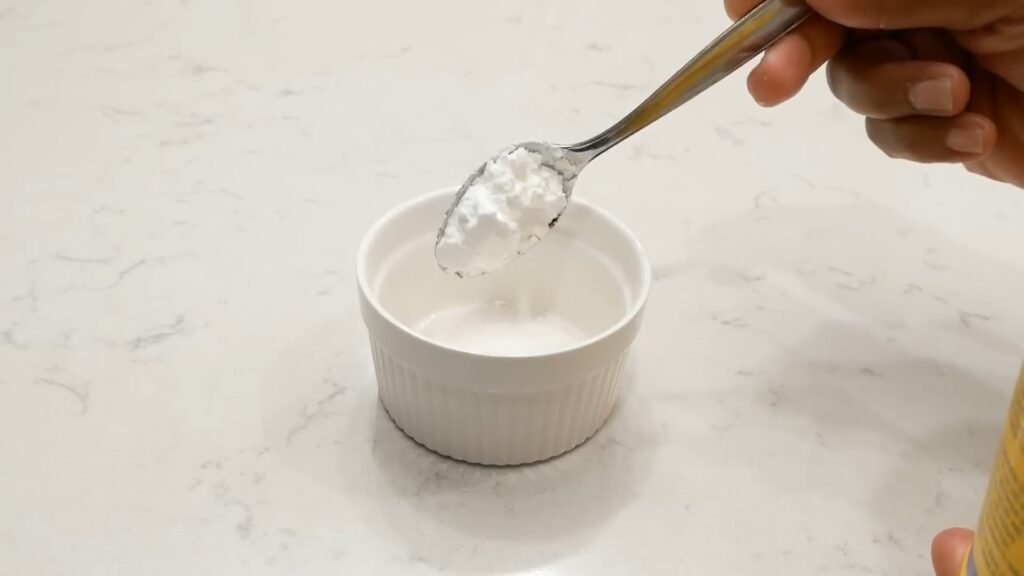
In a small bowl, combine 3 teaspoons of cornstarch with 3 teaspoons of cold water.
Stir until the cornstarch is completely dissolved and the mixture is smooth.
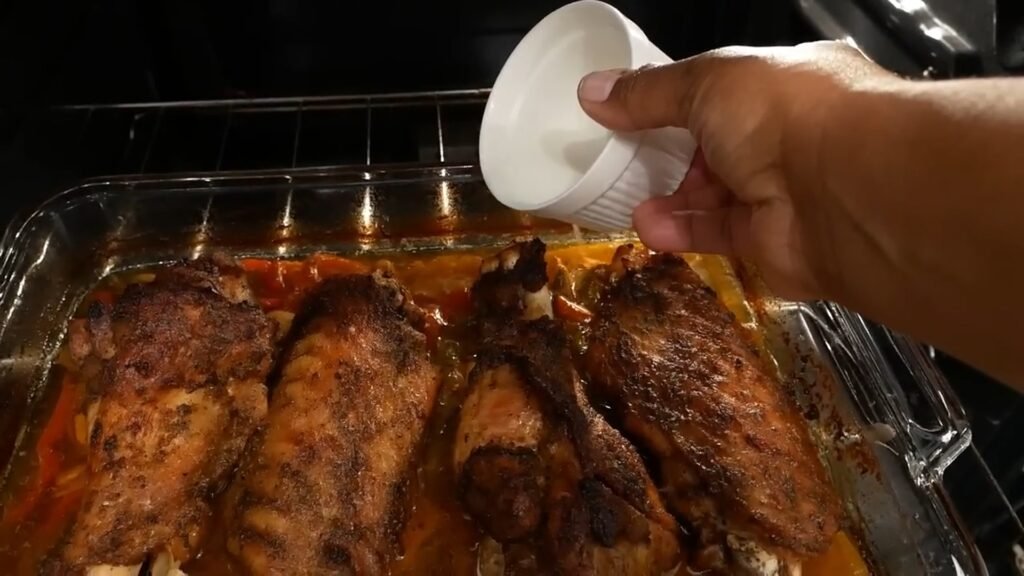
Carefully lift the turkey wings slightly or move them aside to access the cooking liquid.
Stir the slurry again, then slowly pour it into the hot pan juices, stirring gently to distribute it throughout the liquid.
Try to keep the slurry in the broth rather than pouring it directly over the turkey skin.
Step 9: Increase the Oven Temperature
Increase the oven temperature to 400°F.
Return the roasting dish to the oven, uncovered.
Continue baking until the skin develops your desired color and the gravy has thickened.
Keep a close eye on the turkey wings during this stage to prevent the skin from becoming too dark or the meat from drying out.
The cornstarch slurry will thicken the broth as it heats.
Step 10: Rest and Serve
Once the turkey wings are beautifully browned and the gravy has reached your preferred consistency, carefully remove the roasting dish from the oven.
Allow the wings to rest for approximately 5–10 minutes before serving.
Spoon the flavorful gravy and softened vegetables over the turkey wings.
Serve warm with rice, mashed potatoes, or your favorite Southern side dishes.
Enjoy!

What Makes Turkey Wings Fall Off the Bone?
The secret to tender, fall-off-the-bone turkey wings is allowing enough time for the connective tissue in the meat to soften.
Turkey wings contain muscles and connective tissue that benefit from longer cooking times.
When the wings are baked slowly in a covered roasting dish with broth, the combination of gentle heat and moisture helps break down the connective tissue.
As the collagen softens, the meat becomes increasingly tender and easier to pull away from the bone.
Although poultry is considered safely cooked when it reaches an internal temperature of 165°F, that doesn’t necessarily mean turkey wings will have the fall-off-the-bone texture you’re looking for.
For this recipe, tenderness is just as important as temperature.
The wings are ready for the final browning stage when the meat is very tender and can be easily pulled apart with a fork.
Why Bake Turkey Wings at 300°F?
Baking turkey wings at 300°F allows them to cook slowly in the flavorful broth without exposing them to intense heat throughout the entire cooking process.
The lower oven temperature gives the connective tissue more time to soften while the covered roasting dish helps retain moisture.
As the turkey cooks, its juices combine with the butter, vegetables, broth, and seasonings.
This creates a flavorful cooking liquid that can later be turned into gravy.
Once the wings are tender, increasing the temperature to 400°F helps brown the skin.
Using two oven temperatures allows you to focus on tenderness first and browning second.
It’s a simple technique that works especially well for large turkey wings.
How to Make Gravy from Turkey Wing Drippings
One of the best parts of this recipe is the flavorful gravy that develops right in the roasting dish.
As the turkey wings cook, their juices combine with the chicken broth, melted butter, garlic, onions, bell peppers, and seasonings.
Instead of letting those delicious pan juices go to waste, you can thicken them with a simple cornstarch slurry.
A slurry is made by combining cornstarch with cold water until smooth.
Adding the slurry to hot cooking liquid and heating it thoroughly helps create a thicker, gravy-like consistency.
For this recipe, I use 3 teaspoons of cornstarch and 3 teaspoons of water.
The gravy will thicken as the pan juices heat during the final uncovered baking stage.
If the gravy is thinner than you prefer, you can thicken it a little more. If it becomes too thick, stir in a splash of additional broth.
The finished gravy is delicious spooned over the turkey wings, rice, or mashed potatoes.
Helpful Tips for the Best Southern Baked Turkey Wings
Choose meaty turkey wings. Larger, meatier turkey wings are ideal for slow baking because they contain plenty of flavorful dark meat.
Pat the wings dry before seasoning. Removing excess surface moisture helps the olive oil and spices coat the meat more evenly.
Season both sides generously. Don’t season only the top of the wings. Coating both sides ensures better flavor throughout.
Be mindful of the salt. Tony Chachere’s Original Creole Seasoning contains salt, so taste the finished gravy before adding more seasoning.
Use low-sodium chicken broth. Low-sodium broth gives you more control over the final saltiness of the dish.
Cover the roasting dish tightly. A tight foil cover helps trap moisture and prevents the cooking liquid from evaporating too quickly.
Don’t rush the cooking process. Turkey wings need enough time for their connective tissue to soften. If the meat still feels tough, continue cooking until tender.
Check the liquid level. If the broth evaporates too quickly, add a small splash of additional broth to keep the vegetables and drippings from burning.
Use cold water for the slurry. Cornstarch dissolves more easily in cold water. Adding dry cornstarch directly to hot broth can cause lumps.
Brown the skin at the end. Uncovering the turkey wings and increasing the temperature allows the skin to develop more color without sacrificing the tenderness achieved during slow cooking.
Watch the final baking stage closely. The wings are already cooked when you increase the oven temperature. This final stage is primarily for browning the skin and thickening the gravy.
What to Serve with Southern Baked Turkey Wings
These tender Southern baked turkey wings are delicious with classic Southern side dishes, especially anything that pairs well with homemade gravy.
White Rice
Fluffy white rice is one of my favorite ways to serve baked turkey wings.
The rice soaks up the flavorful gravy, making every bite delicious.
Creamy Mashed Potatoes
Mashed potatoes are another wonderful choice.
The rich turkey gravy pairs beautifully with smooth, buttery potatoes.
*Southern Collard Greens
Slow-cooked collard greens with smoked turkey make a delicious addition to a comforting Southern dinner.
*Southern Green Beans
Tender, well-seasoned green beans add another savory vegetable to the plate.
Homemade Cornbread
A slice of warm cornbread is perfect for soaking up the flavorful pan juices.
*Southern Candied Yams
If you enjoy a little sweetness alongside savory dishes, Southern candied yams are a wonderful addition.
Together, these side dishes can turn your baked turkey wings into a complete Sunday dinner or holiday meal.
Easy Variations and Substitutions
Use Turkey Wing Sections
If you can’t find whole turkey wings, you can use separated drumettes and flats.
The cooking time may vary depending on their size.
Add More Vegetables
For extra flavor, add additional onion, celery, or bell pepper to the roasting dish.
These vegetables will soften as the turkey cooks and contribute to the gravy.
Make It Spicier
If you enjoy a little more heat, add a small pinch of cayenne pepper or crushed red pepper flakes to the seasoning mixture.
Start with a small amount, since the Creole seasoning already contains spices.
Make a Thicker Gravy
For thicker gravy, add a little more cornstarch slurry after the original amount has heated and thickened.
Add small amounts at a time to avoid making the gravy too thick.
Make a Smoother Gravy
If you prefer gravy without vegetable pieces, strain the pan juices before thickening.
You can serve the softened vegetables separately or discard them, depending on your preference.
Frequently Asked Questions
How long does it take to bake turkey wings at 300°F?
Large turkey wings may take approximately 2 1/2 to 3 1/2 hours or longer at 300°F when baked covered with broth.
The exact time depends on the size of the wings, your oven, and the roasting dish.
For fall-off-the-bone turkey wings, cook until the meat is very tender and easily pulls away from the bone.
Should turkey wings be covered or uncovered when baking?
For this recipe, the turkey wings are covered during the initial slow-baking stage.
Covering helps retain moisture and allows the meat to become tender.
Once the wings are cooked, the foil is removed and the oven temperature is increased to brown the skin.
What temperature should turkey wings be cooked to?
Turkey wings must reach a minimum internal temperature of 165°F for food safety.
However, because turkey wings contain connective tissue, they often benefit from cooking beyond that temperature to become fall-off-the-bone tender.
Use both a meat thermometer and a fork-tenderness test to determine when they’re ready.
Why are my turkey wings tough?
Turkey wings may be tough if they haven’t cooked long enough for the connective tissue to soften.
Even if the meat has reached 165°F, it may need additional covered cooking time to become tender.
If your wings are still tough, keep them covered and continue baking until the meat pulls away from the bone easily.
Can I use a different Creole seasoning?
Yes, but keep in mind that different Creole and Cajun seasoning blends contain different amounts of salt and spices.
Adjust the seasoning carefully, especially if using a blend that contains salt.
Can I freeze leftover turkey wings?
Yes!
Allow the cooked turkey wings to cool, then transfer them to freezer-safe containers or bags.
Freeze for up to 3 months for the best quality.
You can also freeze the gravy separately.
How to Store and Reheat Leftover Turkey Wings
Refrigerator Storage
Allow the turkey wings to cool slightly before transferring them to an airtight container.
Refrigerate within 2 hours of cooking.
Properly stored cooked turkey wings can be kept in the refrigerator for 3–4 days.
Store the gravy with the wings to help keep the meat moist.
Freezer Storage
Place cooled turkey wings in freezer-safe containers or heavy-duty freezer bags.
Add some of the gravy to help protect the meat from drying out.
Freeze for up to 3 months for the best quality.
Reheating in the Oven
Preheat the oven to 325°F.
Place the turkey wings in an oven-safe dish and add a little gravy or chicken broth.
Cover with aluminum foil and heat until the turkey reaches an internal temperature of 165°F.
Reheating in the Microwave
Place an individual serving in a microwave-safe dish with a little gravy.
Cover and heat in short intervals until thoroughly warmed to 165°F.
Avoid overheating, which can cause the meat to dry out.
Southern Baked Turkey Wings (Tender & Fall-Off-the-Bone)
Ingredients
Method
- Preheat the oven: Preheat your oven to 300°F.
- Prepare the vegetables: Roughly chop the white onion, red bell pepper, green bell pepper, and garlic cloves.
- Prepare the turkey wings: Pat the turkey wings dry with paper towels. Coat both sides evenly with 2 tablespoons of olive oil.
- Season the wings: Combine the Tony Chachere’s Creole seasoning, garlic powder, onion powder, black pepper, paprika, and dried parsley. Season both sides of the turkey wings evenly, rubbing the mixture into the skin.
- Prepare the roasting dish: Add the chopped vegetables to a large roasting dish. Pour in 1 1/2 cups of low-sodium chicken broth and lightly season the vegetables with salt and pepper.
- Arrange the wings: Place the seasoned turkey wings on top of the vegetables. Divide the unsalted butter into smaller pieces and distribute evenly over the wings.
- Cover and bake: Cover the roasting dish tightly with aluminum foil. Bake at 300°F until the turkey wings are very tender and the meat pulls away from the bone easily. Begin checking after approximately 2 1/2 hours and continue cooking as needed.
- Prepare the slurry: Once the turkey wings are tender, combine 3 teaspoons of cornstarch with 3 teaspoons of cold water. Stir until smooth.
- Thicken the gravy: Carefully remove the roasting dish from the oven. Stir the cornstarch slurry into the hot pan juices, distributing it evenly throughout the broth.
- Brown the turkey wings: Increase the oven temperature to 400°F. Return the roasting dish to the oven, uncovered, and bake until the skin reaches your desired color and the gravy has thickened. Watch closely to avoid overcooking.
- Rest and serve: Remove the turkey wings from the oven and allow them to rest for 5–10 minutes. Serve with the flavorful gravy and your favorite Southern side dishes.
Notes
- Turkey wings: This recipe uses 2 whole turkey wings weighing approximately 3.28 pounds total.
- Creole seasoning: Tony Chachere’s Original Creole Seasoning contains salt. Taste the finished gravy before adding more salt.
- Low and slow: Baking the wings covered at 300°F helps soften the connective tissue and create tender meat.
- Doneness: Turkey must reach at least 165°F, but the wings may need additional cooking time to become fall-off-the-bone tender.
- Gravy: The cornstarch slurry thickens the flavorful pan juices. Add a little extra broth if the gravy becomes too thick.
- Browning: Uncover the wings and increase the oven temperature to 400°F only after the meat is tender.
- Storage: Refrigerate leftovers in an airtight container for 3–4 days.
- Freezing: Freeze cooked turkey wings with gravy for up to 3 months for the best quality.
More Recipes to Try
If you enjoyed this recipe, here are a few more you might love:

Did you make these Southern baked turkey wings? Leave a star rating below and let me know how it turned out!